
Full Arch Restorations in Fayetteville, AR

Living with multiple missing teeth, extensive tooth loss, or failing teeth can make eating, speaking, and smiling more difficult. When traditional dentures no longer provide the comfort or stability you want, a more secure solution may be worth considering. At Sequoyah Dental, we offer Full Arch Restorations in Fayetteville to replace an entire arch of teeth with a stable restoration supported by dental implants. Our goal is to restore function, improve oral health, and help you feel comfortable with a smile designed for your individual needs.
What are Full Arch Restorations?
Full arch restorations replace an entire arch of missing or failing teeth with a secure set of replacement teeth supported by dental implants. Instead of placing an implant for every missing tooth, full arch dental implants use several strategically placed implants to support the restoration. This can provide more stability than traditional dentures while restoring the look and function of natural teeth. Depending on your oral health, bone density, and bone volume, bone grafting or sinus lifts may be recommended before implant placement.
During treatment, a temporary prosthesis or provisional prosthesis may be used while the implants heal and integrate with the jawbone through a process called osseointegration. Once the healed implants are ready, implant abutments can connect them to the final prosthesis or permanent prosthesis. The completed implant-supported restoration is designed to provide proper function, comfort, and a natural-looking smile. At Sequoyah Dental, each arch restoration is planned through a comprehensive evaluation to determine the best treatment options for your needs.
Benefits of Full Arch Restorations
Choosing Full Arch Restorations in Fayetteville can provide several benefits for patients who need to replace an entire arch of teeth. Although every patient’s experience and clinical needs are different, a well-planned full arch implant-supported restoration can provide more stability than removable tooth replacement options while supporting everyday comfort and function.
More stability and function: An implant-supported restoration is attached to dental implants rather than just sitting on the gums. This added stability makes it easier to speak and eat comfortably without the movement associated with traditional dentures.
Replacement for extensive tooth loss: Full arch restorations allow multiple teeth or an entire arch to be restored without placing a separate implant for every missing tooth. This makes full mouth rehabilitation more practical for people with extensive tooth loss or failing teeth.
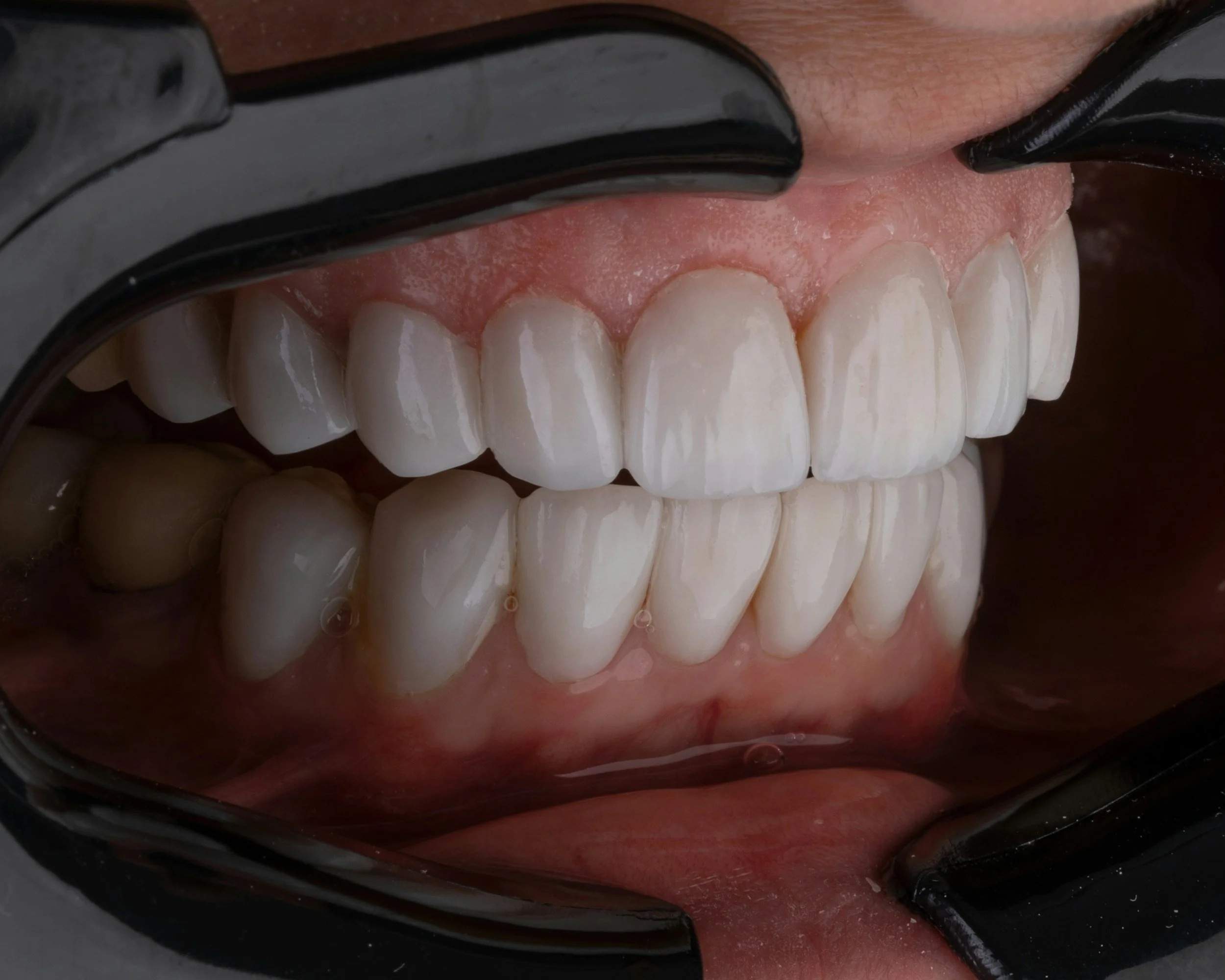
Natural-looking smile: The final restoration is designed to match your facial features, bite, and smile while replacing missing permanent teeth. Modern materials and digital technology allow the final prosthesis to be planned with both cosmetic dentistry goals and proper function in mind.
Support for long term oral health: Dental implants transfer chewing forces to the jaw and can provide a stable foundation for fixed implant-supported restorations. With good home care, regular professional cleanings, and ongoing dental visits, patients can protect the restoration and surrounding soft tissue over time.
Full Arch Restorations Procedure
The full arch restoration procedure is done in stages rather than the same approach for every patient. From your first comprehensive evaluation to the final restoration, we consider your medical history, oral health, available bone, existing teeth, and personal goals to create a treatment plan.
Step 1: Comprehensive evaluation and planning
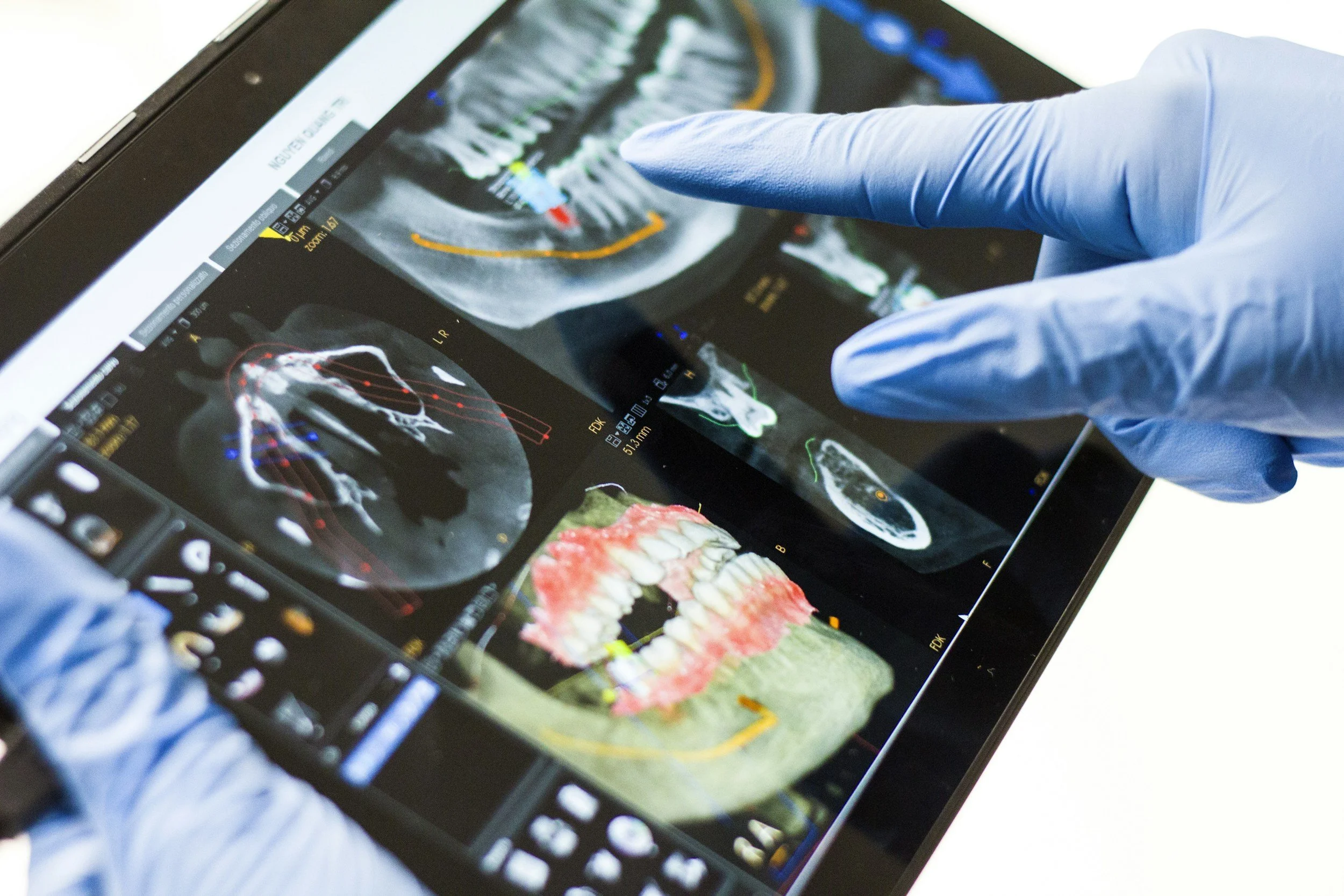
We start with a thorough evaluation of your teeth, gums, bite, jaw, and medical history. Advanced imaging and digital technology may be used to assess bone density, bone volume, existing bone loss, and potential implant sites so we can determine if full arch dental implants are right for you.
Step 2: Preparing your mouth for treatment
During the healing phase, the implants integrate with the jawbone through the process called osseointegration. Proper healing takes time, and we monitor the implant sites, surrounding soft tissue, and restoration while providing instructions to support a smooth recovery and reduce avoidable complications.
Step 3: Dental implant placement
Once the implants have healed, abutments or intermediate abutments can be connected to the final prosthesis. Your final restoration or fixed bridge is designed for function, aesthetics, and fit, completing the full arch implant treatment and your smile.
Step 4: Temporary prosthesis
If damaged or failing teeth remain, they may need to be removed before or during implant placement, depending on your treatment plan. Patients with insufficient bone may also require bone grafting, sinus lifts, or another preparatory procedure to create a suitable foundation for traditional implants or a full-arch implant.
Step 5: Healing and integration
During implant surgery, dental implants are placed at planned locations in the jaw to support the new arch of teeth. Depending on your individual case, local anesthesia may be used to keep you comfortable, and IV sedation may be discussed when appropriate for the planned treatment and your needs.
Step 6: Final restoration
When possible, a temporary prosthesis may be connected to the implants, so you have replacement teeth during the healing period. This provisional prosthesis is designed to protect the treatment area and provide basic appearance and function while the implants heal, although specific temporary restoration options depend on implant stability and your individual situation.
Why Choose Sequoyah Dental for Full Arch Restorations?
At Sequoyah Dental, we understand replacing an entire arch of teeth is a big decision, and we want you to understand your options before moving forward. Our approach to Full Arch Restorations in Fayetteville starts with evaluation and individualized planning rather than assuming one type of restoration is right for everyone. We consider your oral health, comfort, function, appearance, and long-term maintenance needs when discussing full mouth rehabilitation.
Customized treatment planning: Every patient receives a comprehensive evaluation before we recommend dental implants or implant-supported restorations. We consider your medical history, existing teeth, bone density, bone volume, soft tissue, and goals when creating your treatment plan.
Modern technology: Advanced imaging and digital technology can provide detailed information about your jaw and potential implant sites. This information helps us plan implant placement and the final prosthesis for fit, function, and the individual structure of your mouth.
Clear communication throughout treatment: We explain each stage of the procedure, including implant surgery, temporary prosthesis, healing phase, and final restoration. We also discuss risks, alternatives, expected recovery, and maintenance so you can make an informed decision about your dental care.
Ongoing care after restoration: Treatment doesn’t end when the final prosthesis is placed. We provide instructions on home care and regular professional cleanings to help maintain your implant-supported restoration, surrounding gum tissue, and overall oral health.
FAQs
-
We design full arch dental implants as a long-term tooth replacement option, but no dental restoration can be guaranteed to last for a specific number of years. How long your restoration lasts depends on oral hygiene, general health, bite forces, bone support, smoking habits, regular dental visits, and how well the restoration is maintained. The implants themselves and the prosthetic teeth may have different maintenance or replacement needs over time. We recommend regular examinations and professional cleanings so we can check the implants, soft tissue, implant abutments, and prosthesis for signs of wear or problems. If we identify concerns such as screw loosening, peri-implant disease, or changes in your bite, we can address them early to help protect the restoration.
-
We don’t consider one treatment better for every patient because traditional dentures, implant-supported dentures, and fixed full arch restorations serve different needs. A full arch implant restoration offers more stability because it’s supported by dental implants, while traditional dentures generally rest on the gums and are removable. Many patients like having a restoration that feels more secure during speaking and eating. However, implant treatment involves surgery, adequate bone support, healing time, ongoing maintenance, and a larger treatment commitment than traditional dentures. During your evaluation, we can compare the available treatment options and help you decide which one fits your oral health, goals, and individual circumstances.
-
The number of dental implants needed depends on the condition of your jaw, bone volume, bone density, bite, restoration design, and other clinical factors. Some treatment plans can support an arch with 4 implants, while others may require a different number or arrangement of implants. We use advanced imaging and a comprehensive evaluation to examine possible implant sites before deciding on the best approach. We don’t just want to use a certain number of implants, but to create reliable support for the planned fixed implant-supported prostheses. We will explain the recommended number and location of implants after evaluating your individual mouth.
-
Not every patient needs bone grafting before full arch dental implants. We evaluate your existing bone volume and bone density with an exam and imaging before recommending implant placement. If significant bone loss is present, bone grafting or procedures such as sinus lifts may be considered to improve the available foundation for implant dentistry. In other situations, the position and design of the implants may allow treatment to proceed without extensive grafting, depending on your anatomy and treatment goals. We will explain if grafting is recommended and how it will affect your overall treatment plan before we start.
-
Recovery after full arch implant supported treatment varies because the procedure involves different steps depending on the patient’s starting condition and treatment plan. After implant surgery, some swelling, tenderness, and temporary discomfort around the implant sites can occur, and we provide instructions to help with the recovery. Local anesthesia is commonly used during treatment, while IV sedation may be an option in appropriate situations depending on the planned procedure and patient needs. During the following months, the implants integrate with the jawbone while a temporary prosthesis or provisional prosthesis may be used when clinically appropriate. We schedule follow-up visits to monitor proper healing before moving forward with the final prosthesis.
Schedule Your Consultation Today!
If missing teeth, failing teeth, or uncomfortable traditional dentures are affecting your daily life, Full Arch Restorations in Fayetteville may be an option to rebuild your smile. At Sequoyah Dental, we can complete a comprehensive evaluation, discuss your treatment options, and determine if a fixed full arch restoration is right for you. We will explain the procedure, expected healing process, potential risks, and maintenance requirements so you understand what treatment involves before you decide. To schedule a consultation and learn more about dental implants and full arch restorations, call (479) 313-7373. We look forward to helping you find a treatment plan to restore comfortable function, appearance, and confidence in your smile.