
Root Canals in Fayetteville, AR

Severe tooth pain can make eating, sleeping, and even getting through your day difficult. You may notice sharp pain when you chew, pressure sensitivity, swelling around the gums, or discomfort that seems to come from deep inside a tooth. These symptoms can develop when bacteria reach the pulp due to a deep cavity, decay, cracks, or an injury. At Sequoyah Dental, we do root canals in Fayetteville to treat the infection, relieve the discomfort, and help you save a natural tooth whenever possible.
What are Root Canals?
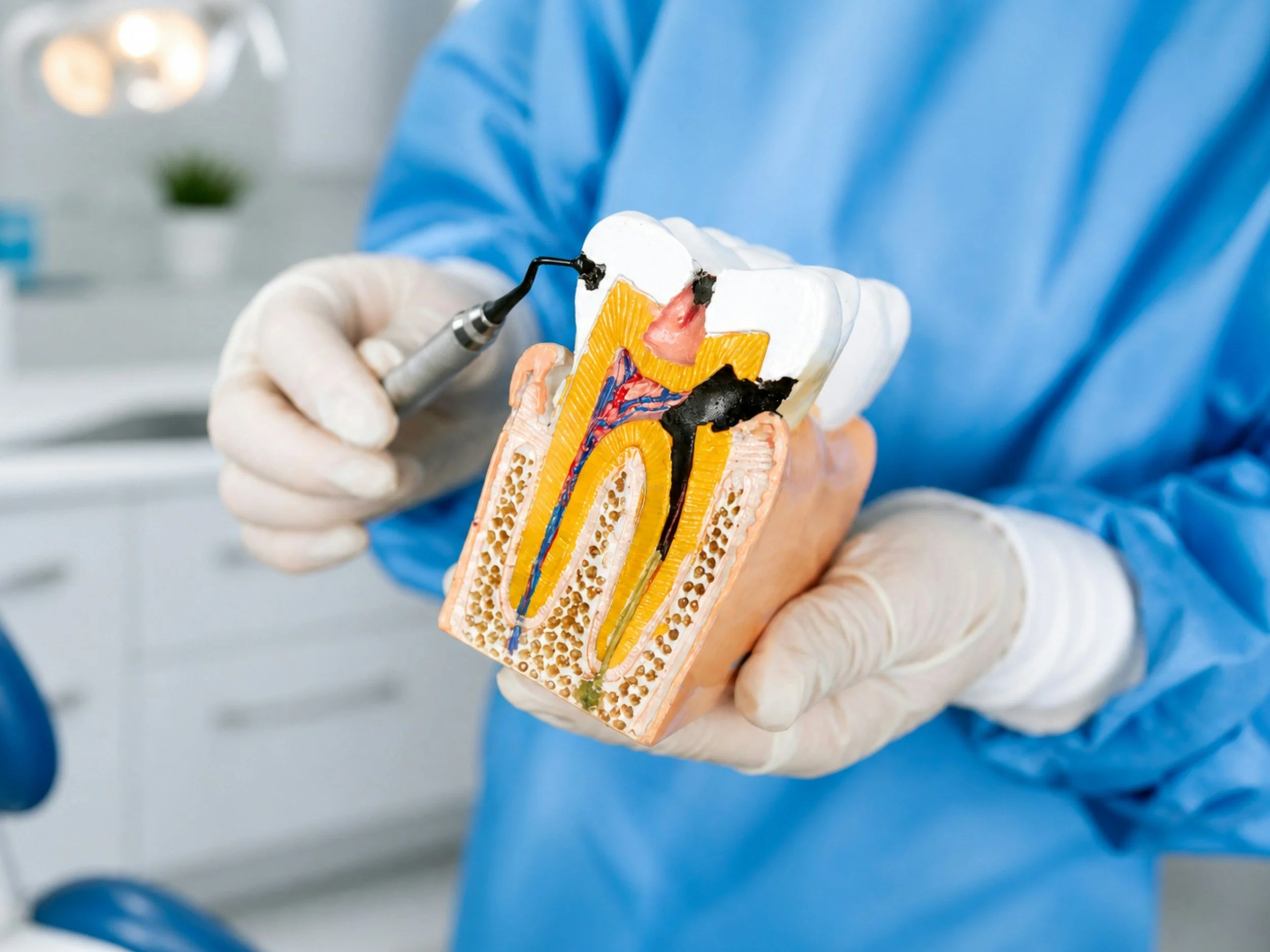
A root canal is a dental procedure to treat the inside of an infected or badly damaged tooth. The center of each tooth has pulp, which includes nerves, blood vessels, and connective tissue. When deep decay, an injury, or a large cavity allows bacteria to reach this area, the pulp can become inflamed or infected. A root canal removes the infected pulp, cleans the inside of the tooth, and seals the space to prevent bacteria from getting back inside.
Root canal therapy is designed to save a natural tooth that would otherwise need to be removed. During the root canal procedure, the dentist will numb the area, place a dental dam around the tooth to control saliva, and carefully clean the canals inside the root. The canals are generally filled with a material called gutta-percha, and the opening is then sealed with a temporary filling or permanent restoration. After treatment, a crown may be recommended to protect the diseased tooth and restore normal chewing strength.

Benefits of Root Canals
Choosing root canals in Fayetteville can provide several benefits when the pulp inside a tooth is infected or damaged. Endodontic treatment focuses on removing the source of the infection while preserving as much of your natural tooth as possible.
Helps Save Your Natural Tooth: A root canal can often prevent an infected tooth from needing to be removed. Saving your natural tooth helps with normal chewing and reduces the need to replace a tooth with a bridge or another restoration.
Relieves Tooth Pain and Pressure: An infected pulp can cause ongoing tooth pain, pressure, swelling, and sensitivity. Removing the damaged tissue and cleaning the root canals can relieve the source of the discomfort and allow the area to heal.
Treats Infection Inside the Tooth: Root canal treatment removes infected pulp, bacteria, and damaged tissue from inside the tooth. Treating the infection can prevent an abscess and reduce the chance of the infection spreading into nearby tissue.
Restores Normal Tooth Function: After the tooth has been cleaned, sealed, and properly restored, most people can go back to normal biting and chewing. With proper care, the treated tooth can continue to function with your other teeth for many years.
Root Canals Procedure
If you need a root canal, knowing what happens during treatment can make your visit more manageable. While every patient and tooth is different, the following step-by-step overview explains how a typical root canal procedure may be completed.
Step 1: Examining the Tooth and Identifying the Problem
The dentist first examines your mouth and asks about symptoms such as pain, swelling, sensitivity, or discomfort when you chew. Dental images may be taken to evaluate the root, surrounding bone, deep decay, pulp damage, or signs of infection and determine if endodontic therapy is needed.
Step 2: Numbing the Treatment Area
After the infected material is removed, the canals are cleaned and prepared for filling. They are then permanently filled and sealed, commonly with gutta-percha, to prevent bacteria from getting back into the root canals.
Step 3: Keeping the Tooth Clean and Dry
Depending on your treatment plan, a temporary filling may be placed until the final restoration is ready. A crown or another suitable restoration may then be used to strengthen the tooth, restore normal chewing, and protect it from further injury or decay.
Step 4: Removing the Infected Pulp
Before the procedure, numbing medicine is applied so the tooth and surrounding gums become numb. Patients may feel pressure during treatment, but the goal is to keep the procedure as comfortable as possible while the dentist works on the infected tooth.
Step 5: Cleaning and Filling the Canals
A dental dam is placed around the tooth to separate it from the rest of the mouth. This helps prevent saliva and bacteria from entering the treatment area while allowing the dentist to work on the tooth in a clean environment.
Step 6: Restoring and Protecting the Tooth
A small opening is made in the tooth so the dentist can reach the pulp and root canals. The infected pulp, damaged nerves, blood vessels, and other tissue are carefully removed, and the inside of the canals is cleaned to treat the source of the infection.
Why Choose Sequoyah Dental for Your Root Canals?
At Sequoyah Dental, we understand the thought of root canal treatment can make some patients nervous, especially when they are already in pain. Our dentist takes time to explain the procedure, discuss your symptoms, and help you understand what to expect before treatment begins. When you visit us for root canals in Fayetteville, our focus is on treating the problem, relieving the discomfort, protecting your oral health, and helping you keep your natural tooth when possible.
Clear Communication: We explain why a root canal may be recommended and what happens during each part of the procedure. You can ask questions about treatment, recovery, numbness, restoring the tooth, and proper care before making decisions about your dental health.
Care Focused on Your Comfort: We use numbing medicine to help keep the treatment area comfortable during the procedure. Our team also checks on you throughout your visit so concerns about pressure, pain, or discomfort can be addressed.
Treatment Designed to Preserve Teeth: Our goal is to treat the infected area while helping you save your natural tooth whenever possible. Keeping a natural tooth can help preserve normal chewing and prevent neighboring teeth from being affected by a space.
Guidance After Your Procedure: We provide instructions about eating, brushing, chewing, and caring for your treated tooth during recovery. You may be advised to avoid biting hard foods with the treated tooth until a permanent filling or crown has been placed.
FAQs
-
We may recommend a root canal when the pulp inside your tooth becomes infected, inflamed, or badly damaged. Common symptoms can include tooth pain, sensitivity, swelling, discomfort when you chew, or tenderness around the gums. A deep cavity, severe decay, crack, or injury can allow bacteria to reach the pulp and cause these problems. However, some infected teeth cause few noticeable symptoms, so a dental examination is important to identify the problem. We evaluate the tooth and surrounding area before determining if root canal therapy is the right treatment.
-
Many patients worry that a root canal will be painful, but numbing medicine is used before the procedure begins. Our goal is to keep the tooth and surrounding area numb while the infected tissue is removed and the canals are cleaned. You may feel pressure or movement during treatment, but you should let us know if you experience significant discomfort. Mild soreness or sensitivity can occur after the numbness wears off, especially around the treated tooth. For most people, this discomfort goes away as the tooth and surrounding tissue heal.
-
The time needed for a root canal depends on the location of the tooth, number of canals, and extent of the infection or pulp damage. Some cases can be done in one visit while others may require more than one visit. We examine the tooth first and explain what your individual treatment will involve. If a temporary filling is placed, you will need to follow our instructions and return for the final restoration. Restoring the tooth properly after endodontic treatment is important to protect it during normal chewing.
-
If an infected tooth is left untreated, the bacteria can continue to spread through the pulp and tissues around the root. This can lead to worsening pain, swelling, an abscess, or damage to the surrounding area. Antibiotics may be used for certain dental infections, but they don’t remove infected pulp from inside the tooth. Without treatment, the tooth may become too damaged to save and may need to be extracted. We recommend having persistent tooth pain, swelling, or other symptoms evaluated as soon as possible so we can determine the best way to treat the problem.
-
A general dentist can do many root canals, while an endodontist is a dental specialist whose work focuses heavily on endodontic treatment. Some cases may be referred to root canal specialists depending on the tooth, root structure, infection, previous treatment, or other factors. At Sequoyah Dental, we evaluate your tooth and determine the best treatment approach for you. If referral to a specialist is needed, we can discuss that with you and explain why additional endodontic care may be helpful. Patients who want more information may also find an informative video or educational resources from organizations such as the American Association of Endodontists helpful in understanding root canal treatment.
Schedule Your Consultation Today!
If you have tooth pain, swelling, a deep cavity, or another dental problem and are wondering if you need a root canal, schedule a visit with Sequoyah Dental. We can examine the tooth, look for signs of infection or decay, and explain whether root canals in Fayetteville can save your natural tooth. Getting treatment before the problem gets worse can help relieve pain and protect your oral health. Call us today at (479) 313-7373 to schedule your consultation and talk to our team about your symptoms. We can help you understand your options and get started on the path to a comfortable mouth.